Tuesday, November 4, 2014

Atrizin® is an antihistamine preparation containing Cetitrizine Hydrochloride. Cetirizine is a piperazine derivative and potent functional antagonist of histamine H1 receptors causing long acting antihistaminc action. Unlike conventional or 1st generation antihistamines, central sedation or antimuscarinic effects do not generally occur with the usual doses of Atrizin. Atirzin is a safe antihistamine for pediatric, young, elderly and even for pregnant women patients.Atrizin® is indicarted for the prevention and symptomatic relief of allergic manifestations, such as seasonal allergic rhinitis, perennial allergic rhinitis, chronic idiopathic urticaria etc. Atrizin® is the safe and trusted antihistamine for the family.
safe and trusted antihistamine for the family
  • Offers greater relief in SAR in children
  • Ensures treatment success in nasal congestion & rhinorrhea of children
  • Provide safety for the pregnant woman


Description:
Cetirizine is a piperazine derivative and a potent functional antagonist of histamine H1 receptors. Atrizin® is a long acting antihistamine. Central sedation or antimuscarinic effects do not generally occur with the usual doses of Atrizin®.


Indications:
Atrizin® is indicated for the prevention and symptomatic relief of allergic manifestations, such as:

  - Seasonal allergic rhinitis
  - Perennial allergic rhinitis
  - Chronic idiopathic urticaria

Dosage and Administration:

Atrizin® tablet:
Adults and children over 12 years: 10 mg (1 tablet) once daily.

Atrizin® syrup: Adult & Children over 6 yrs: 10 mg (2 teaspoonful) daily.
                        Child 2-6 years: 5 mg (1 teaspoonful) daily or 2.5 mg (1/2 teaspoonful) twice daily.

Atrizin® Pediatric Drops:
Infants 6 months to 23 months: 2.5 mg (1 ml) as a single dose, if needed 5 mg (2 ml) in two divided doses; 
2-5years: 5 mg (2 ml) as a single dose or 2.5 mg (1ml) twice a day. 
6-11 years: 10 mg (4 ml) as a single or two divided by the physician.

The maximum recommended dose is 20 mg daily. Cetirizine is safe for use in the elderly patients. Less frequent dosing is advised in patients with reduced creatinine clearance.

Contraindication:
Cetirizine is contraindicated in patients who have shown hypersensitivity or idiosyncrasy to it or its parent compound - Hydroxyzine.

Adverse Reaction: 
No potentially life threatening effects have been encountered.

Acute Overdose:
In the occasional cases patient taking a massive intentional overdose (150-300 mg), sedation has been the only adverse effect and complete recovery has ensured. Like other H1 receptor antagonists, Cetirizine has no specific antidote.

Precautions:
Neonates : The drug is not usually administered to neonates.

Children: Cetirizine is effective & well tolerated in children. No special precautions are required in children over 6 yrs of age. 

Lactating mother: The extent of Cetirizine excretion in human breast milk is unknown but some animal studies have shown excretion in breast milk. Nursing mothers are advised not to take this medication.

Pregnant women: Cetirizine is not teratogenic in animals. Since the animal studies are not always predictive of human response, it should be used only if the potential benefit justifies the potential risk to the fetus.


Drug Interaction:
There are no reports of hazardous interactions with other drugs to date. Concomitant administration with alcohol or diazepam does not impair psychomotor performance any more than the impairment of performance produced by alcohol alone. 

Commercial Pack: 
Atrizin® Tablet: Box containing 15 blister strips of 10 film coated tablets, each tablet contains Cetirizine Hydrochloride BP 10 mg.

Atrizin® Syrup: Amber glass bottle containing 60 ml syrup. Each 5 ml syrup contains Cetirizine Hydrochloride BP 5 mg.

Atrizin® Pediatric Drops: Bottle containing 15 ml pediatric drops. Each ml contains Cetirizine Hydrochloride BP 2.5 mg.


source and Manufactured by
TONGI, BANGLADESH BL 5310 290107
® Atrizin is a registered trademark of Beximco Pharmaceuticals Ltd.
Monday, November 3, 2014

Aerovil® is a preparation of Pheniramine, which is a competitive H1 histamine receptor antagonist.It is indicated in hay fever and perennial rhinitis, vasomotor rhinitis,mild uncomplicated allergic skin reactions like dermatitis, eczema, urticaria, angioedema,pruritis and vertigo.
® time tested antihistamine
       §  Exhibits strong antihistamine activity 
  §  Guarantees confident relief from allergic symptoms 
       §  Cures rhinitis and make the life easier
  §  Assures compliance for pediatric patients


Description:
Pheniramine is a competitive H1 histamine receptor antagonist. Like other alkylamine antihistamines it is also antagonist of muscarinic cholinergic receptors and possesses local anesthetic properties. However, the concentration required for the latter effect is probably not achieved at therapeutic dose.

Indications:
Pheniramine is indicated in hay fever and perennial rhinitis, vasomotor rhinitis, mild uncomplicated allergic skin reactions like dermatitis, eczema, urticaria, angioedema and pruritis, and vertigo.lt has also been used for its antiemetic properties in the prevention and control of motion sickness.

Dosage and Administration:
Children:
Syrup is particularly preferable for children. 1-3 years : 1/2 a measuring spoonful (7.5 mg) 2-3 times daily.
4-12 years : 1 measuring spoonful (15 mg) 2-3 times daily.
Adult:
Adults and children over 12 years : 1-2 measuring spoonful (15-30 mg) 2-3 times daily.

Side Effects:
The most common side effect is sedation that varies from slight drowsiness to deep sleep. Inability to concentrate, lassitude, dizziness, muscular weakness and incoordination may also occur. Other side effects are headache, dry mouth, constipation, blurred vision, etc.

Precautions:
If drowsiness, patients should not drive or operate machinery requiring alertness. Alcohol and certain other CNS depressants can potentiate the sedative effects of antihistaminic and patient should be warned of these effects.

Contraindications:
Pheniramine is contraindicated with known hypersensitivity to pheniramine. New born and premature infants are also contraindicated as it may act as a CNS stimulant.
Use in Pregnancy and Lactation: Pheniramine is contraindicated in pregnancy since safety of pheniramine has not been thoroughly studied. The drug is not recommended during breast feeding, although the concentration achieved in the breast milk are unlikely to be of clinical significance.

Pharmaceutical Precautions:
Store in a cool, dry place, away from light. Keep out of reach of children.

Commercial Pack:
Aerovil® Syrup : Bottle containing 100 ml syrup. Each 5 ml contains Pheniramine Maleate BP15 mg.

Source and Manufactured by
TONGI, BANGLADESH
® REGISTERED TRADEMARK

Wednesday, October 29, 2014

Description
Envit® -M 
is a balanced preparation of Vitamins and Minerals. All are in appropriate amounts, essential to replenish vitamin and mineral deficiencies and thus maintain proper growth and resistance of body against different diseases. Iron, Copper, Calcium, Manganese, Zinc that present in Envit® -M tablet act as co-factors for cell enzymes and thus help in normal metabolic functions.
Composition
Each Envit® -M tablet contains:
Vitamin A
BP
1.50 mg
Vitamin D
BP
10.00 mg
Vitamin C
BP/USP
64.00 mg
Vitamin E
BP
15.00 IU
Thiamine Mononitrate (Vit-B1)
BP
1.50 mg
Riboflavin (Vit. B2)
BP
1.70 mg
Nicotinamide
BP
20.00 mg
Pyridoxine Hydrochloride (Vit- B6)
BP
2.00 mg
Cyanocobalamin (Vit. B12)
BP
6.00 mg
Folic acid
BP
0.40 mg
Calcium Pantothenate
USP
10.92 mg
Ferrous Sulphate
BP
50.00 mg
Potassium Iodide
USP
196.00 mg
Potassium Sulphate
BP
11.14 mg
Magnesium Sulphate
BP
1.00 mg
Cupric Sulphate
BP
2.00 mg
Zinc Sulphate
BP
37.04 mg
Indication
Envit® -M is indicated for the treatment and/or prevention of Vitamin and Mineral deficiencies. Such as:
Conditions where absorption of Vitamins and Minerals become decreased, such as: Inadequate food intake due to restriction or imbalanced diet, which is always related to malnutrition and loss of appetite; gastric and intestinal dysfunction; long term alcoholism; chronic and acute infection; congestive heart failure; hyperthyroidism etc. are also the causes of inadequate absorption of vitamins.
Destruction of intestinal flora due to contraceptive pills, antibiotics and other drugs.
Special conditions relating deficiency of B Vitamins, Vitamin-C, A, D and minerals.
Conditions where requirement of Vitamin increases such as : Post operative condition, severe injury or burn, tissue destruction and wound, pregnancy, lactation, excessive bleeding during menstruation, growing children and for old ages.
To increase body resistance.

Dosage and Administration
1-2 tablets daily or as directed by the Physician.
Precaution
During the 1st trimester of pregnancy, larger dosage of Vitamin-A may cause teratogenesis, so this should be considered during prescribing Multivitamin. Again, excessive doses of Vitamin-A and D can lead to hypervitaminosis. Iron and Zinc chelate with Tetracyclines and absorption of all three agents may be impaired.

Side effect
Multivitamin with Mineral preparation with ordinany doses are usually nontoxic.
Contraindication
It is contraindicated to the patients with known hypersensitivity to any of its constituents.

How supplied
Envit® -M Tablet : Bottle contains 30 film coated tablets.

Manufacturer’s Source: IBN SINA


Description:
Doxysina® 
is a semisynthetic oxytetracycline derivative with bacteriostatic activities. It acts principally by interference with protein synthesis. Doxysina® is a broad spectrum antibiotic and is active against a wide range of gram-positive and gram-negative bacteria, spirochetes, chlamydia, mycoplasma, rickettsiae etc.
The drug is almost completely absorbed (96%) from gastro-intestinal tract. Food does not interfere with the absorption of Doxycycline. 90% of the drug in circulation is bound to plasma protein. The drug is excreted in the faeces, largely as an inactive conjugate or perhaps as a chelate.

Composition:
Each Doxysina® Capsule contains Doxycycline HCl, equivalent to Doxycycline BP 100 mg.

Indication:
Doxysina® has been used in the treatment of a large number of infections caused by susceptible organisms.
Respiratory tract infection : Pneumonia, influenza, pharyngitis, tonsillitis, bronchitis, sinusitis, otitis media and other streptococcal and staphylococcal infections where tetracycline resistance is not a problem.
Genitourinary tract infection : Pyelonephritis, cystitis, urethritis, gonorrhea, epididymitis, syphilis, chancroid and granuloma inguinale.
Chlamydial infection : Lymphogranuloma venereum, psittacosis, trachoma.
Intestinal diseases : Whipples disease, tropical sprue, blind loop syndrome. In acute intestinal amoebiasis Doxysina® may be a useful adjunct to amoebicide.
Bacillary infection : Brucellosis, tularaemia, cholera, traveller's diarrhoea.
Acne: Acne vulgaris, acne conglobata and other forms of acne.
Other infections : Actinomycosis, yaws relapsing fever, leptospirosis, typhus, rickettsial pox and Q fever, cellulitis, furunculosis, abscess and infections
caused by Mycobacterium marinum, Bordetella pertussis and Bacillus anthracis. Also given for prophylaxis of malaria.

Dosage and administration:
Adult : 200 mg at a time or 100 mg every 12 hours for the first day followed by 100 mg per day. The dosage may be doubled depending on severity of the infection.
Children (Over 8 years of age) : Patients weighed 100 pounds or less (<45 kg)2 mg/lb (4.4 mg/kg) divided into two doses on the first day of treatment; follow with 1 mg/lb (2.2 mg/kg) given as a single daily dose or divided into two doses on subsequent days. More severe infections : Upto 2 mg/lb (4.4 mg/kg) may be used. For children over 100 pounds (>45 kg) use the usual adult dose. 
Doxycycline may be taken anytime of the day and in case of gastric irritation, may be taken with food or milk.
Special Dosage Schedule : Acute gonococcal infection : 200 mg immediately, then 100 mg at bed time on the first day, followed by 100 mg 2 times/day for 3 days.
Primary and secondary syphilis : 300 mg per day in divided doses for at least 10 days. Uncomplicated urethral, endocervical or rectal infections in adult caused by Chlamydia trachomatis : 100 mg twice daily for at least 7 days.
Acne : 50 mg daily for 6-12 weeks or longer.
Travelers' Diarrhoea : Doxycycline is used to prevent Traveler's diarrhoea caused by enterotoxigenic E. coli in a dose of 100 mg once a day for 3 weeks.

Precaution:
The use of drug of tetracycline group during tooth development (last half of pregnancy, infancy and childhood to the age of 12 years) may cause permanent discolouration of the teeth. Tetracyclines, therefore, should not be used in these age groups unless other drugs are not likely to be effective or are
 contraindicated.

Side effect:
Doxycycline may produce gastrointestinal irritation to a varying degree in some but not all individuals. Epigastric distress, abdominal discomfort, may occur. Long term therapy with doxycycline may produce hematological changes. Various skin reactions including rashes, urticaria, exfoliative dermatitis may follow the use of Doxycycline but they are rare.

Contraindication:
Hypersensitivity to any of the tetracyclines contraindicate the use of Doxycycline.


How supplied:
Doxysina® Capsule : Box contains 10x10's capsules in blister strip.

Manufacturer’s Source: IBN SINA
Description:
Dopadon®blocks the receptor binding activity of Dopamine. Though all of the Dopaminergic receptors (D1, D2, D3, D4& D5) are present in the brain but Dopadon®blocks only the chemoreceptor trigger zone and stomach. Dopadon®has an action to the gastrointestinal motility. Dopadon®does not readily enters the brain that’s the reason Dopadon®has insignificant effects (psychotropic and neurologic) on the dopaminergic receptors of Brain. Dopadon®accelerates transit through the small intestine, facilitates gastric emptying, enhances antral and duodenal peristalsis and regulates contraction of the pylorus. Dopadon®increases lower esophageal spinchter pressure and esophageal peristalsis and prevents the regurgitation of gastric content, thus prevents the rumination.

Composition:
Dopadon®Tablet : Each Tablet contains Domperidone BP (as Domperidone Maleate BP) 10 mg.
Dopadon®Suspension : Each 5 ml suspension contains Domperidone BP 5 mg.

Indication:
1) Stimulation of Gastrointestinal mobility
a Esophageal reflux, Reflux esophagitis and gastritis
b. Diabetic gastroparesis.
c. Heartburn with or without regurgitations of gastric contents in the mouth.
d. Non-ulcer dyspepsia
e. Functional dyspepsia
f. Speeding barium transit in “follow-through” radiological studies.
g. Acute nausea and vomiting.

2) Prevention and Symptomatic relief of acute nausea and vomiting in adults from any cause but specifically:
a. Cytotoxic therapy
b. Nausea and Vomiting associated with L-dopa and bromocriptine treatment for parkinsonian patients.
c. Radiological therapy.
3) In treatment of migraine with paracetamol

Dosage and administration:
Adults : 1-2 Dopadon®Tablet (10 to 20 mg) or 10-20 ml Dopadon®Suspension every 4-8 hours daily.
Children : 0.2 - 0.4 ml Dopadon®Suspension/10 kg or 0.2 - 0.4 ml/Dopadon® Suspension per kg body weight every 4 - 8 hours daily.
Dopadon®Should be taken 15-30 minutes before meals.

Side effect:
Hyperprolactinemia may produce during the treatment with domperidone, which may result in galactorrhea, breast enlargement, soreness and reduced libido. Dry mouth, thirst, headache, nervousness, drowsiness, diarrhoea, skin rash and itching may occur. Extrapyramidal reactions are seen in patients in clinical studies.

Precaution:
Domperidone is highly metabolized in liver, it should be used with caution in patient with hepatic impairement. There may be increased risk of extrapyramidal reactions in young children because of incompletely developed blood brain barrier.

Contraindication:
Domperidone is contraindicated to patients having known hypersensitivity to this drug and in case of neonates. Domperidone should not be used whenever gastro-intestinal stimulation might be dangerous i.e; gastrointestinal hemorrhage, mechanical obstruction or perforation. Also contraindicated in patients with prolactin releasing pituitary tumor (prolactinoma).

Use in pregnancy and lactation:
Pregnant Woman : Domperidone is not recomended in pregnancy. Lactating mother : Domperidone may precipitate galactorrhea and improve post-natal lactation. It is secreted in breast milk but in very small quantitiesinsufficient to be considered harmful.
Drug interaction:
Domperidone may reduce the hypoprolactinemic effect of bromocriptine. The action of domperidone on GI function may be antagonized by anti-muscarinics and opoid analgesics. Domperidone and MAO (monoamine oxidase) inhibitors combination treatment should be taken carefully.

How supplied:
Dopadon®Tablet : 10 x 10’s tablets in blister pack in a printed carton. 
Dopadon®Suspension : Each bottle contains 60 ml suspension.

Manufacturer’s Source: IBN SINA
Description:
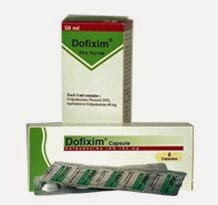
Cefpodoxime proxetil is an orally administered prodrug that is de-esterified in the intestinal wall to release cefpodoxime a broad spectrum, semisynthetic 3rd generation cephalosporin antibiotic. Like other -lactam antibiotics it is bactericidal and acts by inhibiting cell wall synthesis. It is more active than other oral cephalosporin against respiratory bacterial pathogens.

Composition:
Dofixim®Capsule : 
Each capsule contains Cefpodoxime proxetil USP equivalent to 100 mg Cefpodoxime.
Dofixim®Tablet : Each Tablet contains Cefpodoxime proxetil USP equivalent to 200 mg Cefpodoxime.
Dfixim®Dry Suspension : Each 5 ml reconstituted suspension contains Cefpodoxime proxetil USP equivalent to 40 mg Cefpodoxime.

Indication:
Upper respiratory tract infection : Acute otitis media, Acute maxillary sinusitis, Pharyngitis, Tonsilitis.
Lower respiratory tract infection : Acute community acquired pneumonia, acute bacterial exacerbation of chronic bronchitis.
Uncomplicated urinary tract infection : Cystitis, Pyuria. Skin and soft tissue infection : Furuncle, Cellulitis, Subcutaneous abscess, infectious atheroma.
Sexually transmitted disease : Acute uncomplicated urethral and cervical gonorrhoea.
Gastrointestinal Tract Infection : Typhoid fever

Drug interaction:
Antacids : Concomitant administration of high doses of antacids or H2- Blocker reduces peak plasma level by 24% to 42% and the extent of absorption by 27% to 30% respectively.
Probenecid : It inhibits the excretion of Cefpodoxime.
Nephrotoxic drugs : Close monitoring of renal function is advised when Cefpodoxime is administered concomitantly with compounds of known nephrotoxic potential.

Dosage and administration:
Dofixim®capsule should be administered only with food to enhance absorption but suspension may be given without regard to food.

Adults (Age 13 years and older)
Types of infection
Dosage
Duration
Upper respiratory tract infection including tonsillitis and pharyngitis.
100 mg
12 hourly for 5-10 days
Acute exacerbation of chronic bronchitis
200 mg
12 hourly for 10 days
Acute community acquired pneumonia
200 mg
12 hourly for 14 days
Uncomplicated gonorrhoea
200 mg
Single dose
Uncomplicated urinary tract infection
100 mg
12 hourly for 7 days
Skin and soft tissue infection
200-400 mg
12 hourly for 7-14 days
Acute maxillary sinusitis
200 mg
12 hourly for 10 days
Children (Age 15 days to 9 years)
Age of children
Dosage
Duration
15 days-6 months
6 months-2 years
3 years-8 years
Over 9 years
4 mg/kg every
40 mg every
80 mg every
100 mg every
12 hours
12 hours
12 hours
12 hours

Side effects:
Dofixim®has very few side effects. Diarrhoea and rarely antibiotic associated with colitis, nausea, vomiting, abdominal discomfort etc. may occur. Other side effects include rashes, pruritus, urticaria, serum sickness, chest pain, myalgia, dyspepsia, dizziness, vertigo, fungal and vaginal infection.

Use in pregnancy and lactation:
There is no well-controlled and sufficient study of Cefpodoxime proxetil regarding its use in pregnancy. It was neither teratogenic nor embryocidal in animal trial. This drug should be given during pregnancy only if clearly needed. Because Cefpodoxime is excreted in human milk, a decision should be made whether to discontinue brest feeding or to discontinue the drug.

Contraindication:
Dofixim®is contraindicated in patient with known hypersensitivity to it or to other cephalosporin antibiotics.

How supplied:
Dofixim® Capsule : Box contains 2 X 4’s capsules in Alu-Alu Blister pack.
Dofixim® Tablet : Box contains 3 X 4’s capsules in Alu-Alu Blister pack.
Dofixim® Dry Suspension: Bottle contains dry powder for 50 ml & 100 ml suspension.


 Manufacturer’s Source: IBN SINA
Description:
Diplor®
 (Amlodipine) is a dihydropyridine calcium channel blocker, with a longer duration of action, used for the treatment of hypertension and angina pectoris. Administration of Diplor® (Amlodipine) results primarily in vasodilation, with reduced peripheral resistance, blood pressure and afterload, increased coronary blood flow and a reflex increase in heart rate. This in turn results in an increase in myocardial oxygen supply and cardiac output.

Composition:
Diplor® Tablet : 
Each tablet contains Amlodipine besylate BP equivalent to 5 mg Amlodipine.
Diplor®-10 Tablet : Each tablet contains Amlodipine besylate BP equivalent to 10 mg Amlodipine.

Indication:
1) Hypertension
2) Chronic stable angina
3) Vasospastic angina (Prinzmetal's or Variant angina)

Dosage and administration:
Hypertension : Usual dose is 5 mg once daily & maximum dose is 10 mg daily. Small, fragile elderly individuals, or patients with hepatic insufficiency may be started on 2.5 mg once daily. In the treatment of hypertension it may be used alone or in combination with other antihypertensive agents.

Angina Pectoris & Vasospastic Angina :The recommended dose is 5-10 mg daily, with the lower dose suggested in the elderly and in patients with hepatic insufficiency. Most patient will require 10 mg for adequate effect. Amlodipine may be used alone or in combination with other anti-anginal drugs.

Co-administration with other Antihypertensive or Antianginal drugs:Amlodipine has been safely administered with thiazides, ACE inhibitors, Beta Blockers, Long acting Nitrate or Sublingual Nitroglycerin.

Acute Over Dosage:
In humans, experience with over dosage of Amlodipine is limited. If massive over dosage occurs, active cardiac and respiratory monitoring should be instituted. Frequent blood pressure measurements are essential.

Side effect:
The most common side effects are dizziness, flushing, headache, hypotension and peripheral oedema, gastrointestinal disturbance, increased the frequency of micturation, lethargy and eye pain may occur. A paradoxical increase in ischemic chest pain may occur at the start of the treatment.

Caution:
Caution should be taken in patients with hepatic impairment, congestive heart failure, sinus node disease, aortic stenosis, beta-blocker withdrawal, during pregnancy and breast-feeding.

Contraindication:
Amlodipine is contra-indicated in patients with known hypersensitivity to dihydropyridine derivatives.

Storage Instruction:
Store the tablets in a dry place, at 15° - 30°C, away from light. Keep all the medicines away from the reach of children.
How supplied:
Diplor® Tablet :
 Each box contains 3 x 10's Tablets in Blister Pack.
Diplor®-10 Tablet : Each box contains 3 x 10's Tablets in Blister Pack.


Manufacturer’s Source: IBN SINA

Pharmaceuticals

Country

Total Pageviews

Archive

Drug For

Warning!!

This Site does not contain any medical advice.

Popular Drugs

Contact Form

Name

Email *

Message *